
Risk has a habit of becoming obvious at the worst possible time. A supplier suddenly can’t deliver. A regulation changes and nobody has worked through what it means for the business. Or a process that’s been running for years turns out to have a problem no one noticed.
A risk assessment survey gives you a chance to look at those weak spots before they cause trouble. It won’t tell you everything that could go wrong, and it certainly can’t remove all risk. What it can do is help you spot issues earlier, when you still have time to decide what needs fixing.
What a risk assessment survey actually does
A risk survey is not the same as a risk register. A risk register is a document that lists known risks. A risk assessment survey is the process of actively going out to find them, often by asking the people closest to operations, customers, suppliers, or processes what they are seeing.
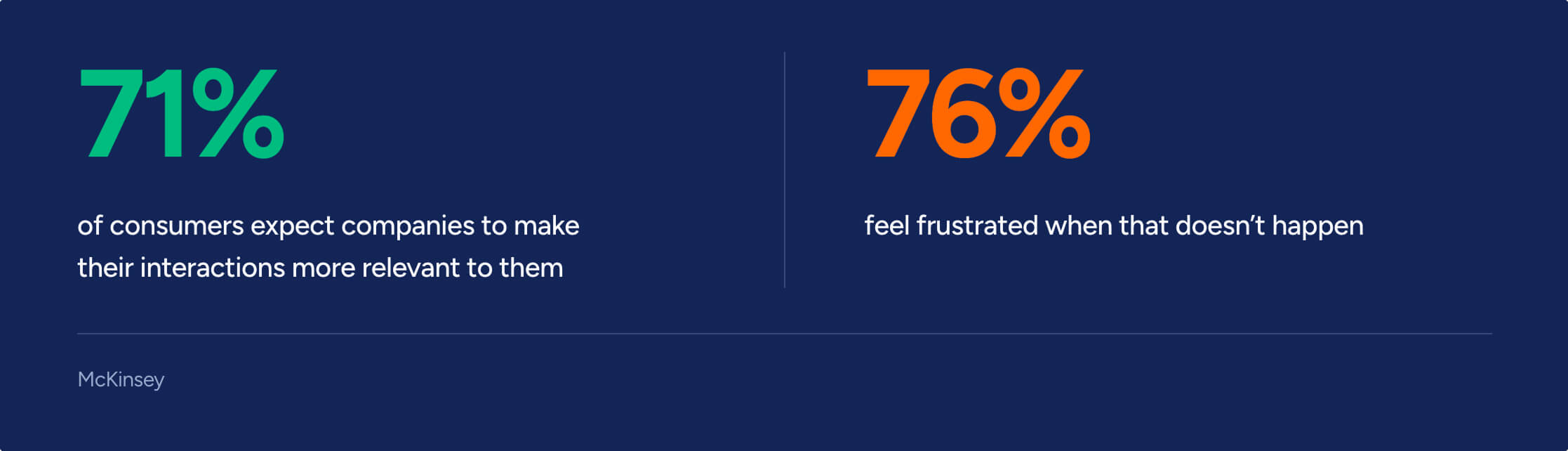
The distinction matters because risk registers are built from what leadership already knows. Risk surveys surface what leadership does not know yet. The most consequential risks in majority of businesses are the ones that have not made it onto anyone’s radar, often because the people who can see them most clearly have never been asked directly.
According to McKinsey’s 2025 Global GRC Benchmarking Survey, 42% of organizations across industries say their use of IT and GRC systems for risk management needs improvement, and 15% describe their systems as absent or lagging entirely. That is not a technology problem at its core. It is a visibility problem. Before you can manage risk, you have to see it.
What types of questions are required in a risk assessment?
Risk assessment questions need to surface information about threats, vulnerabilities, and controls that would not be visible without asking. Generic questions produce generic answers. The most useful risk assessment surveys ask about specific processes, relationships, and scenarios.
There are four categories of questions that every business risk assessment should cover:
Likelihood questions
How probable is a given risk? These questions ask respondents to estimate the chance that a specific event or failure will occur within a defined time horizon. The goal is not precision. It is to distinguish between risks that are unlikely and those that are likely to occur.
Example questions:
- How likely is it that we’ll have a problem with an important supplier in the next 12 months?
- How likely is it that customer information could be affected by a data breach in the next year?
- How likely is a change in regulations to affect our current compliance status?
Impact questions
If a given risk materializes, how severe would the consequences be? Impact questions force respondents to think through the downstream effects of a risk event, which is often where the real business exposure becomes clear.
Example questions:
- If this supplier could no longer work with us, how quickly could we find another one without disrupting operations?
- If this system was down for 48 hours, what would that mean for the business financially and operationally?
- If this regulatory change were to go through, how much would it cost to achieve compliance?
Control questions
What is already in place to prevent or limit this risk? A risk assessment checklist that identifies only threats without assessing existing controls is incomplete. Understanding what mitigations exist and how effective they actually are is absolutely necessary.
Example questions:
- What controls are currently in place to prevent this type of failure?
- How confident are you that these controls would hold up under a real stress scenario?
- When were these controls last tested or reviewed?
Detection questions
Would we know if this risk was materializing? Some of the most dangerous risks in a business are the ones that develop slowly and without obvious signals. Detection questions ask whether the business has the visibility to catch a risk early.
Example questions:
- What early warning indicators exist for this type of risk?
- How quickly would we know if this process was failing?
- Who in the organization would be the first to notice this problem, and how would they escalate it?
How to structure a risk assessment survey for a business
The way a risk survey is set up matters just as much as the questions themselves. If you ask about everything at once, the responses can become scattered and difficult to use. A well-structured survey should be organized around the areas where the business is most likely to face problems. Here is the step-by-step process of designing one.
Start with risk categories
The categories might include operations, finance, compliance and regulations, technology and cybersecurity, people, suppliers and other third parties, and reputation. Keeping the survey organized this way makes it easier to see how different teams view the same areas of risk.
Ask different stakeholders different questions
A risk assessment survey sent to the entire organization and asking everyone the same questions produce a muddled picture. The finance team sees different risks from the operations team. Front-line employees see different risks from senior leadership. A well-designed risk survey uses branching logic to route respondents to questions relevant to their role, location, or function.
Quantify wherever possible, but always include open-ended questions
Scales and ratings are important for aggregating risk perception data across large groups of respondents. But the most useful information in any risk assessment often comes from open-ended responses, where a respondent describes something they are worried about that no pre-built question anticipated. Every risk assessment survey should include at least one open-ended question asking what risk the respondent thinks is being underestimated or overlooked.
Build a risk assessment checklist from the survey results
Once survey responses are in, the output should inform a risk assessment checklist that prioritizes identified risks by likelihood and impact. High-likelihood, high-impact risks need immediate attention. Low-likelihood, low-impact risks can be monitored. The two-by-two matrix of likelihood versus impact is a standard tool here, and survey data is what populates it with something better than executive intuition.
What makes a risk survey different from a standard business survey
A risk survey is not a satisfaction survey or a feedback survey. The people completing it are not rating a past experience. They are making predictions and judgments about future events and system vulnerabilities. That requires a different mindset from respondents and a different approach from whoever is designing the survey.
A few things that make risk assessment surveys work differently in practice are:
Respondents need to feel safe being honest. A risk survey that surfaces concerns about compliance gaps, management decisions, or operational problems will only produce useful data if respondents believe their answers will not be used against them. Anonymity is critical, particularly for surveys that ask employees about risks associated with leadership or organizational culture.
Responses need to be segmented. People in different parts of a business won’t always see risk the same way. A supply chain manager may be focused on supplier issues, while a CFO may be more concerned about financial exposure. Neither view is necessarily more important. Looking at responses by function, seniority, and location gives you a clearer picture of what different teams are seeing.
The survey needs to be repeated. A one-time risk assessment only tells you what the business is dealing with at that moment. That can change pretty quickly. Suppliers change, regulations shift, new technology is introduced, and risks that seemed minor can become much more important. McKinsey’s 2025 Resilience Pulse Check found that 55% of organizations expect technology to create a major or severe disruption in the future. Running the survey every quarter or year, with the core questions kept consistent, lets you track how those risks are changing rather than treating each assessment as a fresh starting point.
Risk assessment in business: from survey data to action
Collecting risk survey data is just the beginning. The data is only useful if it informs a decision or action.
After any risk assessment survey, the findings should flow into three outputs:
- A prioritized risk register. List each risk along with how likely it is to happen and how much it could affect the business. Assign an owner to each one and decide what needs to happen next. The survey helps build this list. But the final priorities must still be decided by the people managing the risk.
- A gap analysis. Comparing what the survey revealed against what is already in the risk register shows where blind spots exist. Risks that show up repeatedly in survey responses but are absent from the official risk register are exactly the kind of thing a risk survey is designed to surface.
- A communication plan. Risk surveys work best when respondents understand that their input led to something. Communicating what was found at an appropriate level of detail and what the business is doing in response builds trust in the process and improves the quality of responses in subsequent survey cycles.
Running risk assessment surveys with Zoho Survey
For businesses managing risk assessment across multiple departments, locations, or supplier relationships, the operational challenge is getting the right questions to the right people and analyzing the results in a way that makes cross-functional risk patterns visible.
Zoho Survey lets you tailor risk assessment surveys to different people in the business. Branching logic can change the questions based on someone’s role, function, or location. So, a warehouse manager can get a different set of questions from a finance director, while everything is still managed in one place. Anonymity settings can also help people give more honest answers when the questions are sensitive. Cross-tabulation makes it easier to compare how different departments or locations view the same risks without having to pull together separate survey files.
If you run risk surveys every few months, you can also keep the core questions the same and schedule each round in advance. That makes it easier to compare responses over time and notice when people’s view of a particular risk starts to change. Check out the Zoho Survey templates section to get started with your next survey fast.