
A bike-share company wanted to know whether commuters would pay extra for e-bikes. So it posted a survey link on its social pages, taped QR flyers to the farmers market bulletin board, and watched 1,200 responses arrive within a week. The verdict looked decisive: riders loved the idea and would happily pay $2 more per ride.
The company ordered 300 e-bikes. Six months later, most of them sat docked and unused.
Nobody had checked who answered. The respondents were weekend riders and farmers market regulars, people who ride for fun and don't mind paying for novelty. The commuters, who ride on a tight budget at 8 a.m. on a hectic Tuesday, were barely in the data.
This was a hypothetical scenario, but this exact situation plays out across organizations in different domains. The survey wasn't badly written. It was badly promoted. Where you promote a survey decides who answers it, and who answers it decides whether the results mean anything.
Why survey promotion is a sampling decision
Most teams treat survey promotion as a volume problem. They get the link in front of as many people as possible. But the channels you pick decide who sees the invitation, and the people who see it decide who responds. Promotion is the first sampling step, and it happens whether you plan it or not.
Professional pollsters build their entire approach around this. Pew Research Center's American Trends Panel, a nationally representative panel of randomly selected U.S. adults, pays incentives ranging from $5 to $20 depending on whether a respondent belongs to a harder-to-reach part of the population. The differential amounts are designed to raise participation among groups that traditionally have low response propensities. Pew doesn't assume an even response across the population will happen on its own. It engineers it.
You may not have Pew's budget, but you can borrow the principle. Before choosing a single channel, write down who you need to hear from and where those people spend their time. Then promote there.
How to promote a survey: channels you should consider using
No channel is best in every situation. Each one reaches a different slice of people and carries a different bias.
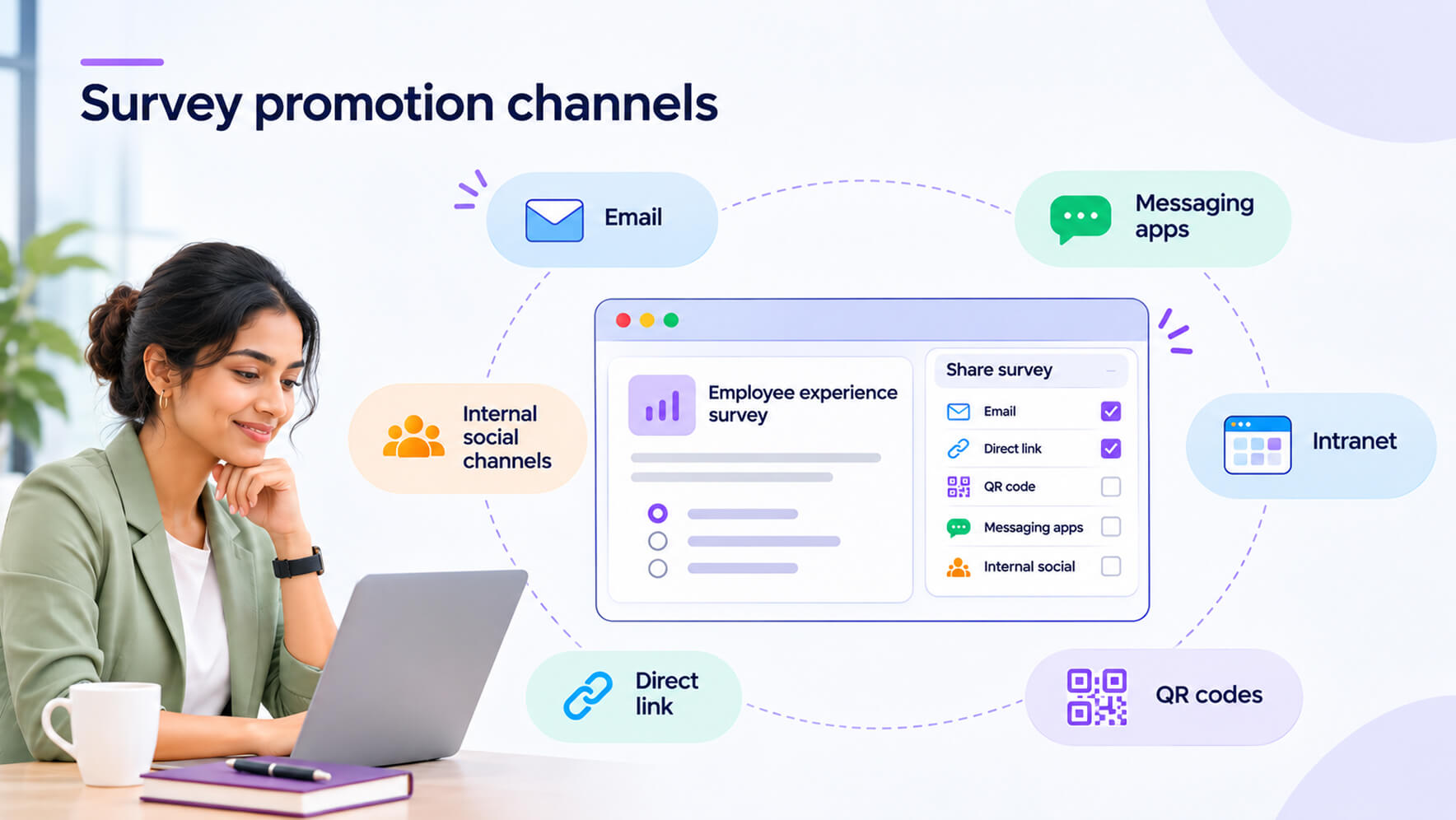
- Email. Email is the default channel for a reason. It's cheap, trackable, and works well when you have a contact list. The catch is that email lists skew toward people who already know and like you. So results from a customer list tell you little about new prospects or untapped market segments.
- SMS. Text messages get read. According to Forbes, SMS open and response rates reach as high as 98% and 45%, compared with roughly 20% and 6% for email. SMS suits short surveys sent right after an experience, and it requires explicit opt-in consent from every recipient.
- Website and in-app prompts. An intercept catches people in the middle of using your product, which makes it ideal for feedback on a specific experience. It cannot reach anyone who isn't already on your site.
- Social media. Fast and broad, but self-selecting. The people who answer a survey posted on social are the people who follow you and feel strongly enough to click. Paid targeting can narrow the audience, though it adds cost.
- QR codes. Useful anywhere physical and digital meet. Examples include receipts, packaging, event signage, waiting rooms, store shelves, etc. A QR code works best when the survey is short and mobile-friendly.
- Partners and communities. Industry associations, niche newsletters, forums, and employer networks are often the only practical route to specialized or hard-to-reach groups (such as nurse practitioners or small-farm owners).
- Research panels. When you have no list and no easy way to find your audience, a panel lets you buy responses from people who match your screening criteria.
How to get the right people to take your survey
Reaching a broad audience is easy. Getting responses from the people who can provide meaningful insights takes a more deliberate approach. Here are a few practical tips to ensure you get the right people to respond to your survey.
Match the channel to the respondent
The way to avoid the bike-share mistake is to plan promotion around the respondent instead of focusing only on the channel.
Start by describing your target respondent in concrete terms by asking:
- What they do
- When they are reachable
- What device they're probably holding
Then list the places that audience actually shows up. The commuters in the opening example could have been reached by posting QR codes at transit stations, providing the information to local employers, or via a short SMS to registered weekday riders.
Use more than one channel, since every channel carries its own bias and a mix tends to balance them. Add two or three screening questions at the start so that respondents outside your target exit early instead of diluting your data. And check who is responding while the survey is still open. If one group is flooding in and another is missing, shift your promotion toward the gap before the survey closes.
Write an invitation people act on
Even a perfectly targeted channel fails if the invitation gets ignored. A few habits make a consistent difference.
Open with who you are and why you are asking in the first line. A message that explains why this person's opinion matters gets more attention than one that starts with "We value your feedback."
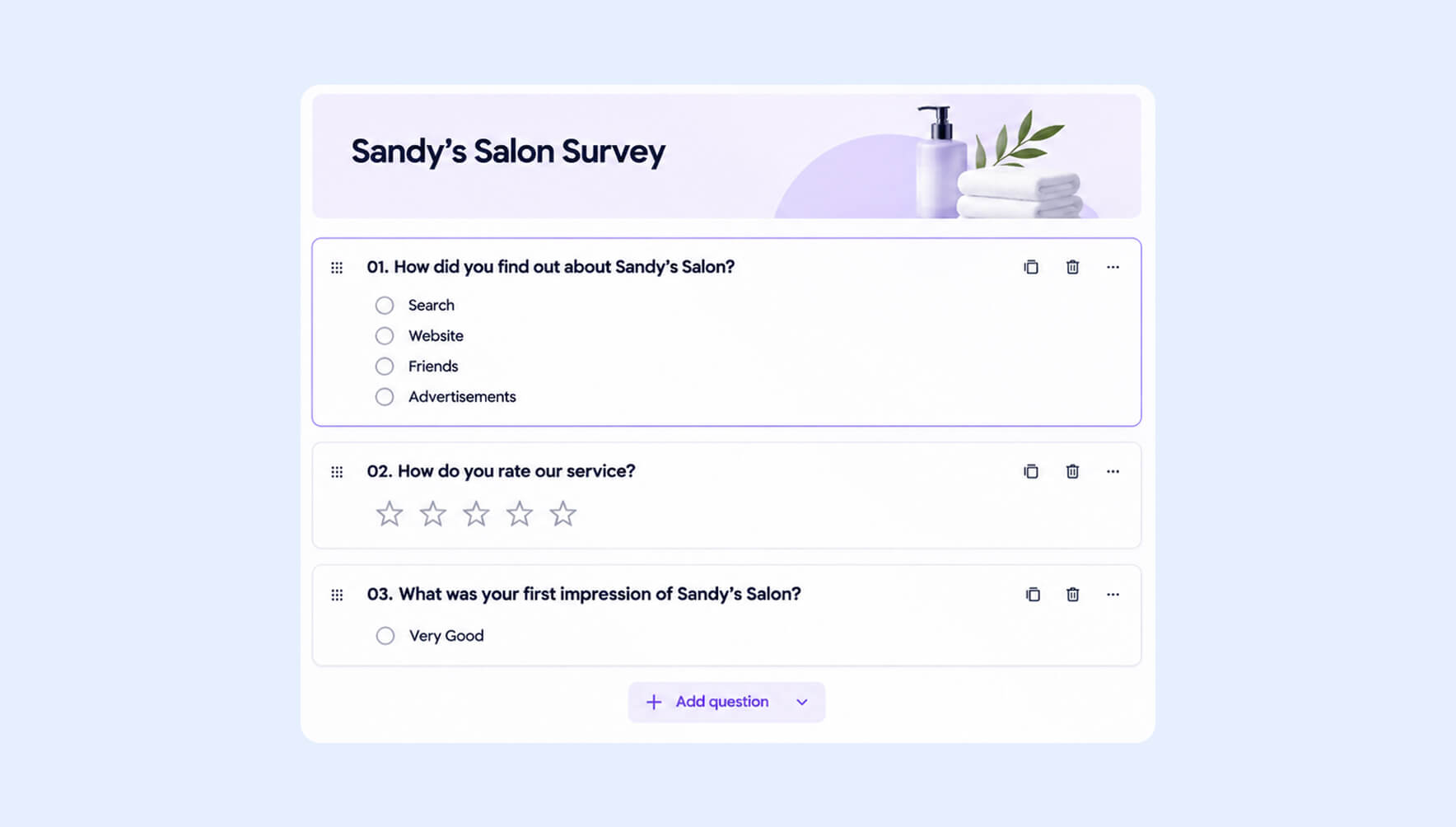
Be honest about time. "This takes about three minutes" works only if it does take three minutes. People who feel misled about length abandon the survey and remember it the next time you ask.
Also, say what happens with the answers. A single sentence about how the results will be used, or what changed after the last survey, signals that the effort won't disappear into a spreadsheet.
In addition, use one clear call to action. One button, one link. Send from a named person rather than a generic address, and make the subject line specific to the respondent's situation. Finally, plan one or two reminders, spaced a few days apart, aimed only at people who haven't responded.
Use incentives for survey participation
Incentives work, though not equally. A systematic review and meta-analysis of randomized controlled trials, published in PLOS ONE, found that every incentive type increased response rates compared with no incentive. Money performed best, with a relative response rate of 1.25, followed by vouchers at 1.19 and lotteries at 1.12.
Size matters, but the relationship isn't a straight line. A June 2025 research brief from NORC at the University of Chicago compared a $2 prepaid incentive with a $5 prepaid incentive sent to previous nonrespondents in a final contact attempt. The $5 group responded at 14.8%, against 12.5% for the $2 group. A few extra dollars, paid up front, moved a group that had already ignored earlier requests.
Incentives also change who shows up. A study in Survey Practice on a web survey of utility customers found that a small incentive raised response rates, with some evidence that it also affected which kinds of customers chose to respond. That's the same lesson as the bike-share story. Any lever that changes participation is also a sampling lever. So, decide on purpose which groups you want to attract.
Fun ways to encourage survey participation
Not every nudge has to be a payment. People respond to surveys that feel easy and a little rewarding.
- Write like a person. Conversational question wording and a bit of personality make a survey feel less like paperwork. Keep the wording neutral, though. Fun shouldn't tilt the answers.
- Show progress. A progress bar and a short "almost done" message give people a reason to finish.
- Start with one question. Put the first question inside the email or on the landing page so that a click on an answer begins the survey.
- Reveal how others answered. Showing live results after someone submits turns a chore into a small payoff, and it works well for public-interest and community surveys.
- Make it a team effort. For employee surveys, share department-level participation rates (and never individual answers) and let teams see how they compare.
- Use live polls at events. A QR code on a slide with results updating on screen gets far better turnout than an emailed link the next day.
- Close the loop. A short update on the action you took after users filled out the survey is one of the best ways to encourage survey participation the next time you ask.
Mistakes that bring in the wrong respondents
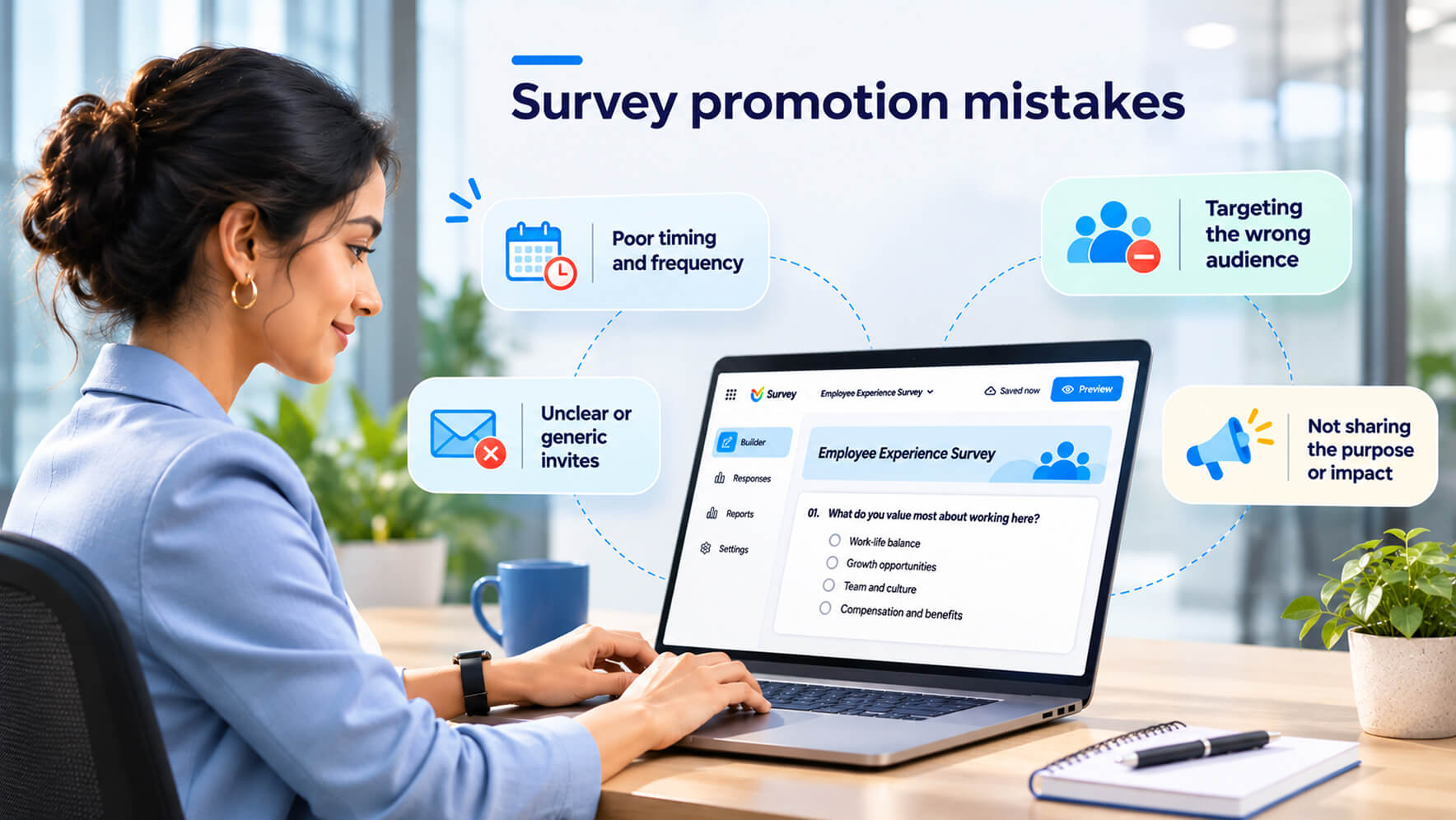
- Relying on a single channel. One channel means one bias. Mix at least two or three.
- Skipping the screener. Without screening questions, anyone who clicks can answer, including people who were never in your audience.
- Offering a reward too big for the task. An oversized incentive attracts people who are there for the payout and tend to rush through questions.
- Promoting only to people who already like you. Fans and loyal customers are happy to respond. Prospects and lapsed customers often hold the most useful criticism, and they rarely appear unless you go looking for them.
- Leaving public links unprotected. A link shared openly can be passed around, answered twice, or picked up by bots. Limit responses per device or use unique links where the audience is known.
- Waiting until the end to review who responded. By then, correcting the mix is no longer possible.
Using Zoho Survey to promote and distribute your survey
Zoho Survey lets you take one survey and send it through several channels such as:
- Email invitations
- SMS
- A shareable link for social posts
- A QR code for print and in-person use
- An embed for your website
Email and SMS invitations show sent, opened, and responded status so that you can see which contacts still need a reminder.
When your own contact list can't reach the audience you need, Zoho Survey’s Buy Responses service connects you with research panels segmented by demographic, economic, and geographic attributes. Real-time reports let you check the mix of respondents while the survey is still live, which gives you time to adjust your promotion before it closes.
Zoho Survey is now available with a 7-day, credit card-free Enterprise trial, giving you full access to its distribution features and capabilities from day one.
The bottom line
Survey promotion isn't about getting the most clicks. It's about getting the right people to answer, and being able to tell whether they did. Pick channels based on where your real audience spends time, write invitations that respect their attention, and choose incentives deliberately. The bike-share company had 1,200 responses and still got the answer wrong. A smaller, better-targeted set of commuters could have told them to keep the e-bike order on hold.